
The short answer
Start with positioning, not tactics. Write one sentence on who you serve and why you’re different, fix your website basics and set up analytics, publish a small weekly batch of content in one format, show up on the one social channel your customers use, and track where each new customer came from. Spread it over 30 days, one step per week.
If you’ve read Content Marketing 101 and you’re still staring at a blank to-do list wondering what to actually do first, this is the post for that moment.
I’ve launched marketing from zero more times than I can count, both inside companies and on the side (this blog included). And every single time, the businesses that get traction aren’t the ones with the biggest budget; they’re the ones who did the unglamorous basics, in order, before they started chasing tactics. No growth hacks. No “10x your reach” nonsense. Just a checklist you can actually finish.
So here it is: the exact sequence I’d use if I were starting your small business’s marketing from scratch today. Print it, check boxes, come back when you’re stuck.
Before You Touch a Single Tactic: Lock Your Positioning
Every wasted marketing dollar I’ve ever seen traces back to skipping this step. If you don’t know exactly who you’re for and why you’re different, every piece of content and every ad dollar is a guess.
- Write a one-sentence answer to: “Who is this for, and what do they get that they can’t get elsewhere?”
- Name your three biggest competitors and write down the one thing you do that they don’t.
- Pick ONE audience to speak to first: the specific person most likely to buy this month.
- Write down the words that customer uses to describe their problem (not your industry jargon).
This isn’t a branding exercise; it’s the filter you’ll run every future decision through.
Get Your Home Base in Order
Your website doesn’t need to be fancy. It needs to convince someone who’s already interested that you’re legitimate and easy to buy from.
The non-negotiables:
- A homepage that says what you do and who it’s for in the first five seconds
- One clear call to action above the fold
- A contact method that actually gets checked
- Mobile-friendly: check it on your own phone, right now
- Basic on-page SEO: a real page title, a meta description, and your primary keyword in your homepage headline
The one thing people skip:
- Set up analytics before you launch anything else. You cannot improve what you don’t measure.
Build Your First Month of Content, Not a Content Calendar for the Year
You do not need 12 months of content planned before you post anything. You need proof that content works for your business, which means shipping a small, consistent batch first.
- Pick ONE format you can sustain weekly (blog post, short video, or LinkedIn post, not all three)
- Write down 4 topics your ideal customer is already searching for or asking you directly
- Draft the first piece using your positioning language from Section 1
- Add a clear next step at the end of every piece
Gut check: if a piece could have been written by any competitor, it’s not specific enough.
Show Up Where Your Customers Already Are
Pick one primary social channel based on where your specific customer spends time, not where you personally like posting.
For most small businesses, that starts with social. In LocalIQ’s 2026 small business marketing report, unpaid social media was the most-used channel (66% of businesses), and more than 90% of respondents used Facebook. Treat that as a starting point, not a rule: check where your customers actually are.
- Claim your business name/handle consistently across platforms, even ones you’re not using yet
- Complete the profile fully: photo, bio with your one-sentence positioning, link to your site
- Post your first 5 pieces before worrying about a “content strategy”
- Engage as your business daily for 10 minutes
Set Up Tracking So You Know What’s Actually Working
This is the step most small business owners skip, and it’s the one that separates “marketing that feels productive” from marketing that grows the business.
- Know your number: how many new customers do you need this month, and from where?
- Track where each new customer actually came from; ask them, don’t assume
- Check your numbers weekly, not “eventually”
- Kill or fix whatever isn’t producing after a fair trial (60-90 days)
Once your site is live, connect Google Search Console too. It now shows whether your pages appear in Google’s AI answers, which I cover in why your business may not be showing up in AI search.
Your First 30 Days, In Order
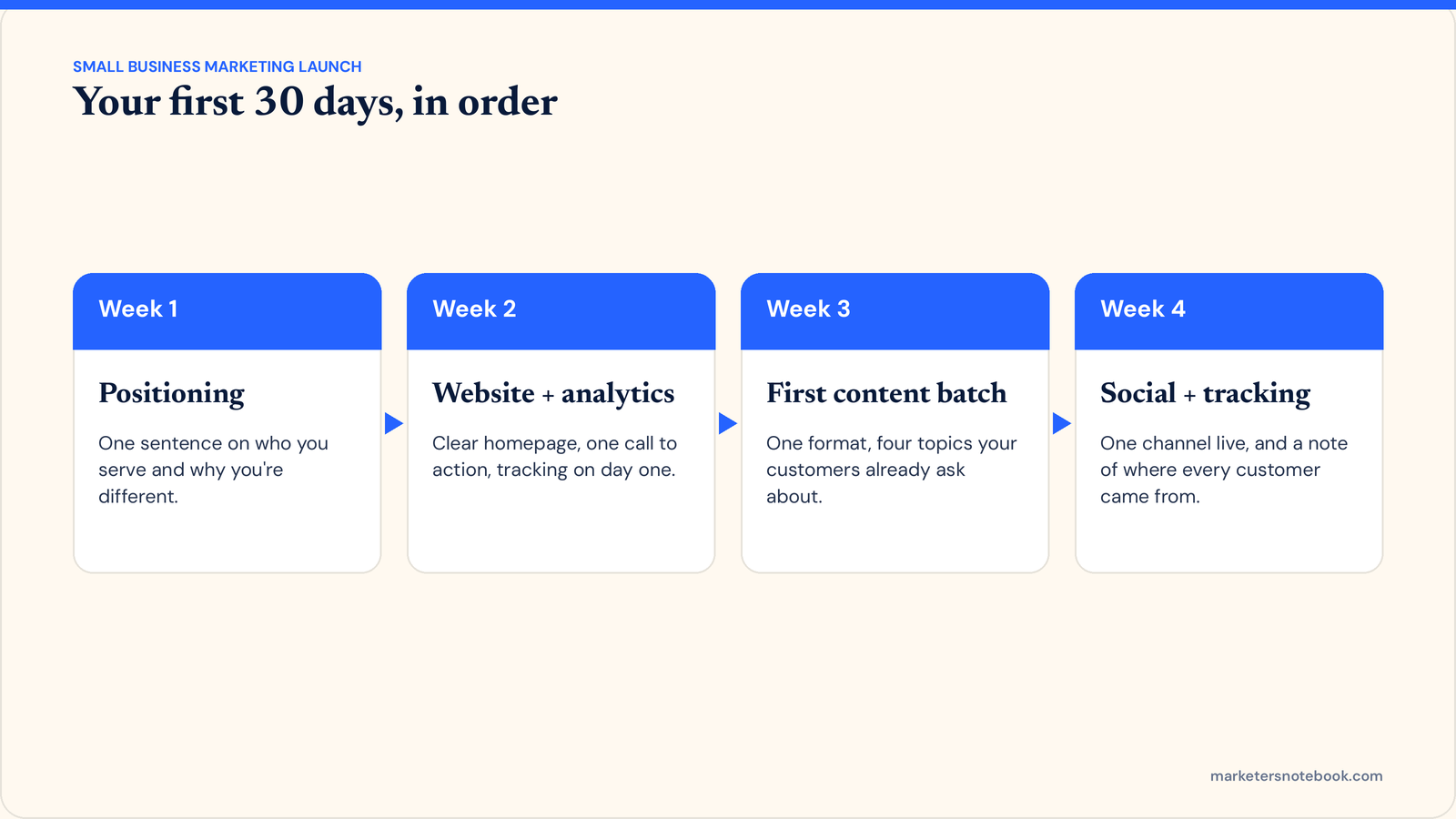
- Week 1: Positioning
- Week 2: Website basics + analytics
- Week 3: First content batch
- Week 4: Social presence live + tracking in place
That’s it. That’s the whole launch. Everything after this is refinement.
Frequently asked questions
How much should a small business spend on marketing to start?
There’s no universal number, but the sequence matters more than the budget at this stage. Most of this checklist costs time, not money.
Do I need a website before I start marketing?
You need something people can land on, even a single well-built page.
What’s the single biggest mistake small businesses make when starting marketing?
Skipping positioning and jumping straight to tactics.
How long until small business marketing shows results?
Give any single channel 60-90 days of consistent effort before judging it.
Should I do everything on this list at once?
No, follow the 30-day sequence above: one section per week.
Ready to Move From Checklist to Habit?
A checklist gets you started. A system keeps you going. If this was useful, the companion post on Content Marketing 101 walks through how to keep the content engine running once you’re past week one, subscribe so the next one lands in your inbox.